
Ecologies of the Gut-Brain Axis
Microbial communities within the human gut influence metabolism, immune function, and neurological health. My research investigates how plastic chemical exposures and microbial disruption may contribute to the biological processes underlying Alzheimer's disease and related dementias.
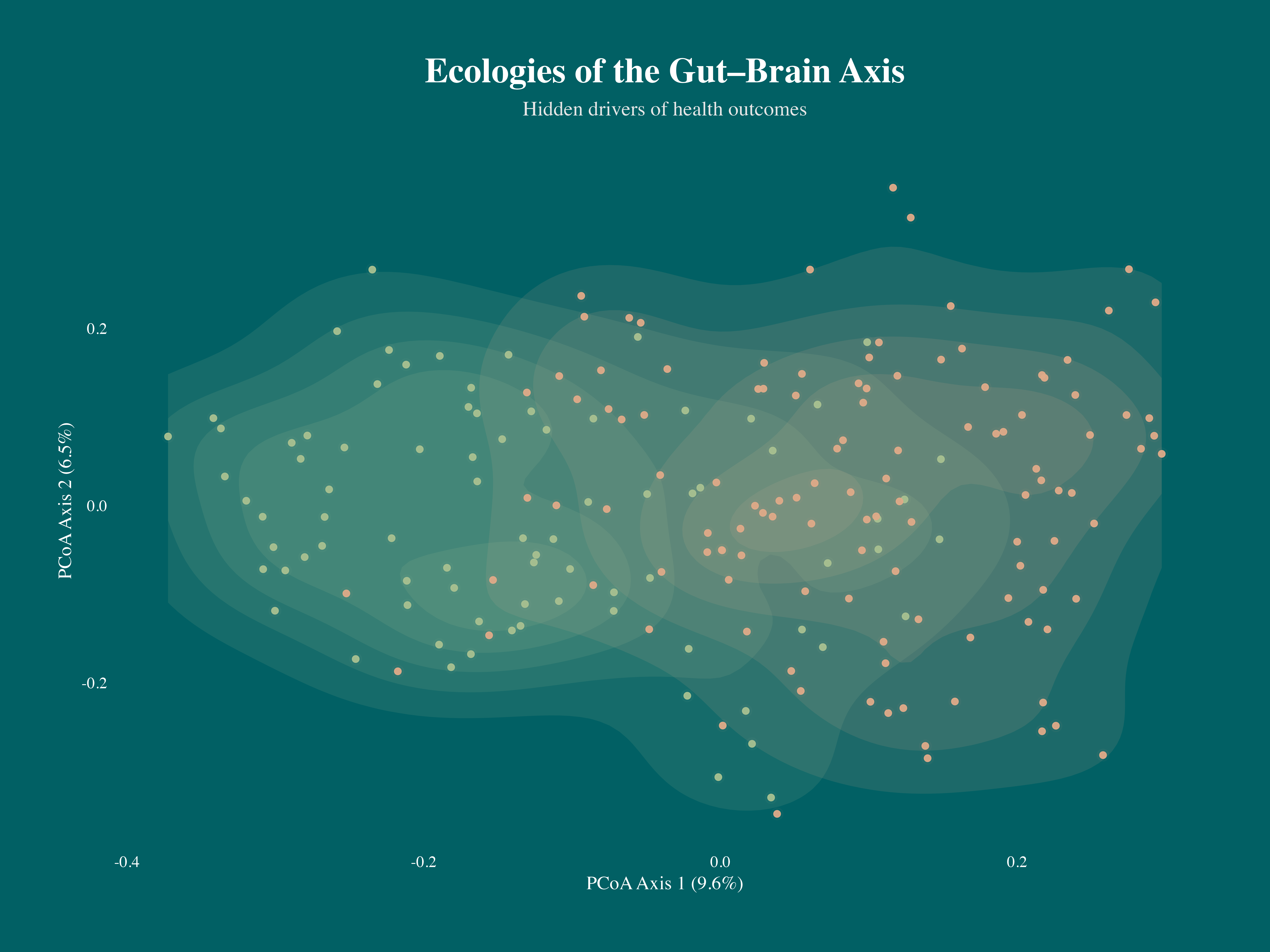
This visualization maps gut microbial community composition across participants in the Wisconsin Registry for Alzheimer's Prevention (WRAP), one of the world's largest and longest-running studies of individuals at risk for Alzheimer's disease. Each point represents one individual's microbiome; proximity reflects similarity in microbial composition, and colors denote community types identified through clustering. Axes are derived from principal coordinate analysis (PCoA) of ecological distances, compressing complex microbial data into two dimensions to reveal underlying structure.
My research characterizes gut microbiome composition, quantifies phthalate concentrations — chemicals associated with microplastics — and links both to sociodemographic factors, behavioral data, cognitive health, and Alzheimer's biomarkers. Phthalate exposure disrupts microbial balance, compromises intestinal barrier integrity, and research is increasingly associating it with neurodegenerative risk.
